
Visit any local shop, restaurant, library, museum, or friend’s home, especially during the change of seasons, and you’ll notice that aesthetics plays a big part in making the experience more memorable.
This topic of creative “place setting” was the anchor for conversations in the Atelier over the past few Mondays.
Thoughtful Visual Arrangements Impact Our Experiences
At first, the children were divided when asked to consider why decorations at our upcoming Family Feast are important.
Discussion sparks included:
-
How can a nicely set table make the food taste better?
-
What’s an artist’s secret to setting the scene for a big moment?
-
What bits and pieces can you put together to make something that really shows off who you are?
Sketching Helps Scaffold Thoughts
Sketches are more than just a drawing. They’re a vibrant representation of how children think, organize details, and plan for future happenings! In the spirit of the Reggio Emilia approach, where the child is seen as the leader and collaborator in their own learning, this plan demonstrates powerful visual thinking.
By mapping out the art stations for the Family Feast centerpieces, sketches show how children intuitively understand how to do the following:
Lead the Learning (The Reggio Way)
The children took the initiative to solve a real-world problem, like preparing 70 student-made centerpieces for a feast during one studio session. Then, they designed a practical solution. This is a perfect example of seeing the child as competent and capable of directing a complex project.
“Miss Amanda, if you want me to help you organize art stations, each class can work on their centerpieces in different stages.”
Organize Space and Materials
One student visualized the flow of students, where materials should be located for efficiency, and how to manage the “messy” parts of creating centerpieces for the big feast! Her pre-planning ensured a smooth, creative experience for all Weaver students during Monday studio time.
“I drew a sketch showing how we can spread out the materials on different tables so everyone has enough space to get things done.”
Plan Ahead
This blueprint allowed both the studio teacher and her students to anticipate needs, think through the steps, materials, and collaboration required to bring the thoughtfully constructed centerpieces to life!
“Is this the table that I start out at? I need to make my sculpture base first, right?”
A Student-Led Collaborative Project
As you can see, this plan beautifully illustrates the competence of our young learners at Weaver Child Development Center!
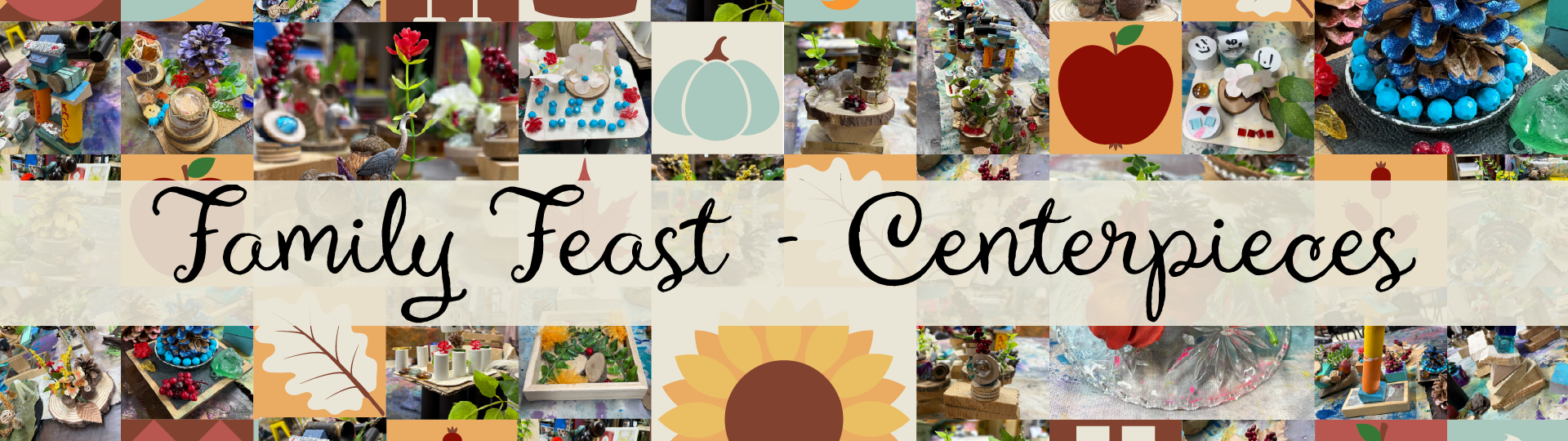
When the planning was complete, the students moved into building their centerpieces. They experimented with natural and recycled materials. They explored textures, colors and structures that reflected the spirit of the Family Feast.
As classes rotated through the studio, the room buzzed with creativity! Students shared ideas, borrowed techniques, and created centerpieces that showcased individuality and the Weaver community.
We hope you’ll see the value that a simple little pinecone can bring to a party!