
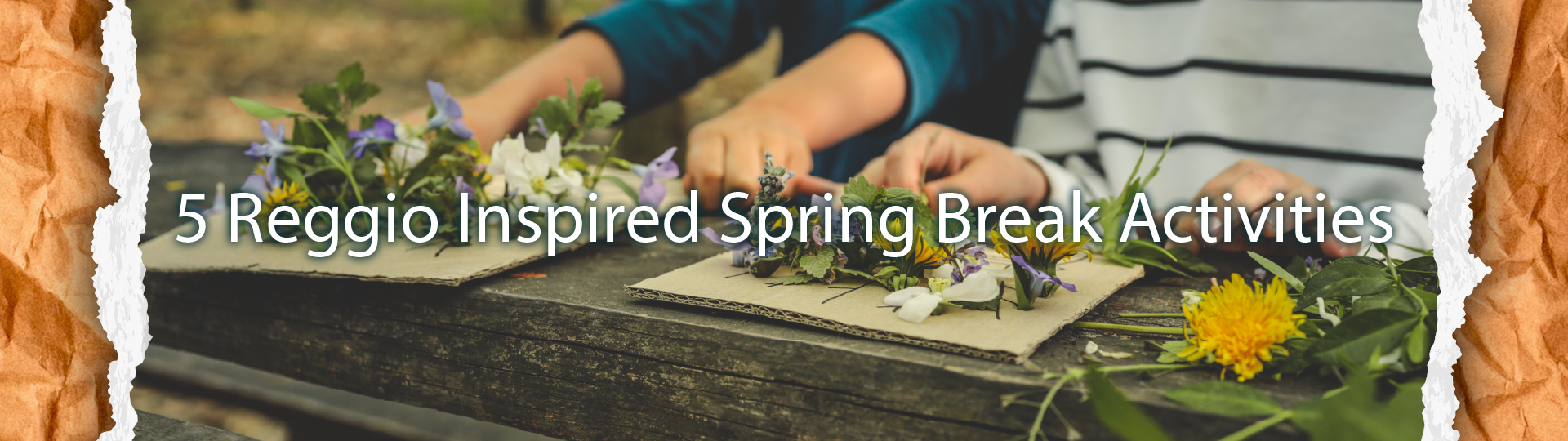
Looking for things to do over Weaver Child Development’s (CDC) spring break? Check out these five nature crafts you can do at home to continue learning and explore the outdoors with your children. These simple, hands-on spring break activities spark curiosity, creativity, and meaningful connection.
Why Spring Break Activities Matter for Early Learning
Weaver CDC believes that learning doesn’t stop when children leave the classroom. It continues through play, exploration, and shared experiences at home. Engaging in play with your child helps strengthen relationships, build confidence, and practice cooperation. Research consistently shows that play is essential to development, supporting everything from problem-solving to social-emotional growth.
As a Reggio-inspired school, Weaver CDC embraces the idea that children are capable, curious learners. Children thrive when they have the freedom to explore. The natural world is an extension of the classroom. Over the break, it is an opportunity for meaningful nature crafts and hands-on discovery.
With that in mind, here are five simple spring break activities you can try at home.
1. Throw a Backyard Picnic
A backyard picnic is a fun and easy way to turn lunchtime into an adventure. It encourages children to slow down, enjoy their surroundings, and experience everyday routines in a new way.
- Gather your basket or reusable tote
- Pack a blanket
- Prepare lunch, drinks, and utensils
- Pack everything into your basket
- Head out to the backyard
- Lay out the blanket
- Set up your lunch and enjoy the fresh air together
2. Dyeing Easter Eggs Naturally with Everyday Ingredients
Dyeing Easter eggs naturally is a beautiful, eco-friendly alternative to traditional kits. Instead of artificial dyes and excess packaging, natural ingredients like fruits, vegetables, and spices create unique, earthy colors. The natural dyes create varying tones so no two eggs will look the same.
- Gather materials: hardboiled eggs, natural ingredients (beets, onion peels, coffee, turmeric, blueberries, carrots, purple cabbage), pots, sieve, containers, and white vinegar
- Place your chosen ingredient in a saucepan with water
- Bring to a boil, then simmer for at least 30 minutes
- Strain liquid into a dyeing container
- Add eggs and soak for at least 1 hour (overnight for deeper color)
- Remove eggs and let dry
- Store in the fridge until ready to use
Optional: Hollow out eggs before dyeing to avoid spoilage.
3. Create Nature Crowns for Imaginative Play
Creating nature crowns is a wonderful way to blend art, storytelling, and outdoor exploration. These nature crafts allow children to express creativity while imagining themselves as explorers, royalty, forest guardians, and more.
- Gather materials: sturdy cardboard (like an old cereal box), glue, string or tape measure, and natural items
- Measure your child’s head circumference
- Cut cardboard to size (add 1 inch overlap, about 3 inches tall)
- Let your child arrange flowers, sticks, leaves, and pine needles on the crown
- Glue materials onto the cardboard (adult help if needed)
- Once dry, form into a ring and secure the overlap with glue
- Wear and enjoy imaginative adventures
4. Go on a Nature Scavenger Hunt
A nature scavenger hunt is an engaging spring break activity for all ages. It encourages observation and connection to the outdoors. It also helps children slow down, notice details, and use all their senses.
- Make a list of things you want to see or gather on your nature scavenger hunt
-
- Pinecones, ladybugs, spiderwebs, dandelions, leaves, feathers, rocks, shells, etc.
-
- Head outside for a walk or go to a local nature preserve
- Check off items as you find them
- Use an old egg carton to collect, store, and display your treasures
- Afterward, reflect together:
- What was your favorite find?
- What was the hardest spot?
- What senses did you use?
5. Make an Easy Pinecone Bird Feeder
A pinecone bird feeder is a simple, hands-on activity that invites wildlife into your backyard. The bird feeder is also a great way to extend learning beyond the activity itself.
- Gather materials: pinecone, string or twine, peanut butter (or alternative), plate, butter knife or spoon, birdseed
- Tie the string onto the pinecone first to avoid sticky hands
- Scoop a tablespoon of peanut butter onto a plate
- Gently spread peanut butter onto the pinecone scales with a utensil
- The more peanut butter you add, the more birdseed you can stick and the longer your pinecone bird feeder will last
- Dip and roll the pinecone in a bowl of birdseed until fully coated
- Hang it outside in a tree
- Watch for visiting birds
Optional: If pinecones aren’t available, use an empty toilet paper roll instead.
Bring Reggio Inspired Learning Home This Spring Break
Rooted in the Reggio Emilia philosophy, these nature crafts invite children to explore, ask questions, and engage with their surroundings in meaningful ways.
At Weaver CDC, we believe that the environment plays a powerful role in how children learn. By bringing these experiences home, you extend that approach beyond the classroom and support your child’s natural curiosity. Whether you’re creating nature crowns, going on a nature scavenger hunt, or building a pinecone bird feeder, you’re supporting your child’s growth in ways that are both fun and impactful.
We’d Love to See Your Creations
Try out these spring break activities, snap a photo, and share your experience on social media. Tag Weaver CDC on Facebook and Instagram! We can’t wait to see how your family brings learning to life at home.