
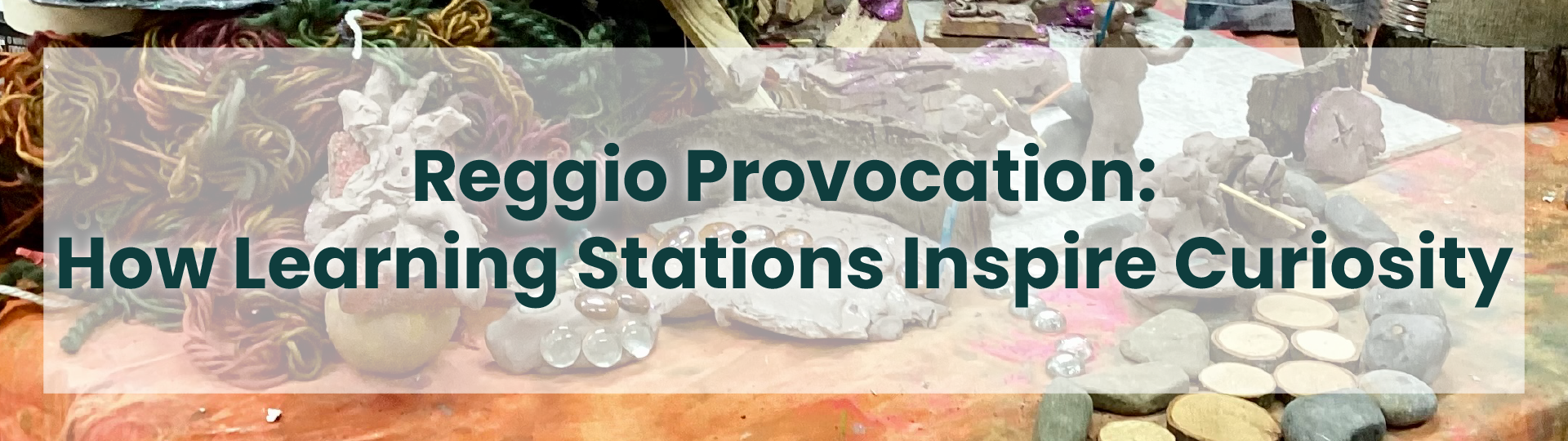
When entering a Reggio-inspired classroom for the first time, you will notice the environment right away. Instead of rows of desks or preset worksheets, it is a thoughtfully arranged space. Filled with open-ended materials, the classroom invites children to explore and engage. They also contain Reggio provocation stations that are a powerful tool in how children learn at Weaver Child Development Center (CDC).
At Weaver CDC, Reggio provocations are not activities children are required to complete. Instead, they are invitations to explore. They spark curiosity, encourage questions, and support a child centered approach that honors how children naturally learn best.
What Are Reggio Provocations?
In the Reggio Emilia philosophy, provocations are intentional setups within the classroom designed to provoke thought, investigation, and dialogue. These learning stations might include loose parts, art materials, natural objects, light and shadow elements, or building materials arranged in a way that encourages exploration.
Rather than telling children what to do, Reggio provocations ask children to decide how they want to engage. A table with clay, shells, and wooden tools might inspire sculpting or sensory questions about the earth. A mirror paired with lights could lead to discoveries about reflection or shadows.
This approach reflects Weaver CDC’s belief that children are capable, curious, and full of potential. Through inquiry-based learning, children lead their own discoveries while teachers observe, listen, and support.
Materials That Invite Inspired Learning
The materials used in Reggio provocations are intentionally open-ended. You won’t find toys with only one correct outcome. Instead, teachers provide materials that can be used in countless ways to support inspired learning.
Common materials you might see in Weaver CDC’s learning stations include:
- Natural items like stones, sticks, leaves, and shells
- Art supplies such as clay, wire, paint, charcoal, and fabric
- Loose parts like beads, corks, tiles, and wooden pieces
- Dioramas about the events in history
- Books and images that connect to emerging classroom interests
These materials help support a child centered approach. Children engage at their own pace, follow their interests, and express ideas using their “hundred languages.”
How Provocations Shape Lessons and Learning
At Weaver CDC, learning doesn’t begin with a rigid lesson plan. Instead, teachers carefully observe how children interact with the Reggio provocations and build curriculum from there. A simple provocation around ramps and balls might grow into a deeper investigation of movement, gravity, and problem-solving.
This is where inquiry-based learning comes to life. Teachers listen to children’s questions, document their thinking, and extend learning. They add new materials, ask thoughtful questions, and connect experiences across subjects like math, science, literacy, and art.
Even though learning is child-led, core academic concepts are thoughtfully woven into these projects and explorations. Weaver CDC ensures children are prepared while still experiencing joyful, inspired learning.
The Freedom to Engage
One of the most important aspects of Reggio provocations is choice. Children are always invited, never required, to participate. A child may spend ten minutes deeply engaged at one of the learning stations, or they may walk past it entirely. Both choices are respected.
This freedom is essential to a true child centered approach. Learning looks different for every child, and honoring autonomy helps children build confidence, self-regulation, and intrinsic motivation. Often, children who initially observe from a distance will return later, ready to engage when the moment feels right to them.
How Provocations Are Switched Out and Evolve
Unlike traditional classroom centers that stay the same for weeks or months, Reggio provocations are dynamic and ever-changing. At Weaver CDC, provocations are regularly refreshed based on children’s interests, questions, and ongoing projects.
Teachers may:
- Add new materials to deepen exploration
- Remove items that no longer spark curiosity
- Combine two learning stations to support collaboration
- Shift provocations to align with seasonal changes or classroom inquiries
This flexibility keeps the classroom environment alive and responsive. It also reinforces inquiry-based learning, where curriculum evolves alongside the children rather than being predetermined.
Reggio Provocations at Weaver CDC
At Weaver CDC, every provocation, material, and space is chosen with intention and care. Reggio provocations support collaboration, creativity, and meaningful discovery.
By offering thoughtfully designed learning stations, Weaver CDC creates space for children to ask questions, build relationships, and develop a lifelong love of learning. This balance of structure and freedom allows inspired learning to unfold naturally. Guided by curiosity, supported by skilled teachers, and grounded in a strong child centered approach, children thrive here at Weaver CDC.
If you’re curious to see Reggio provocations in action, schedule a tour of Weaver CDC today. Experience how our classrooms nurture discovery, creativity, and growth every day.